Korean Alphabet (Hangul) with Pronunciation
40 letters that click together into syllable blocks. Tap any letter to hear a native speaker. Below we show how the blocks work, the sounds English doesn't have, and real words to read on your own.
- 40 letters19 consonants, 21 vowels
- Syllable blocksㅎ+ㅏ+ㄴ=한
- No capitalsone form per letter
- 1443created by King Sejong
All 40 lettersKorean alphabet
Vowels are green. Romanization follows the official system you'll see on Korean road signs. Tap a letter to listen.
14 basic consonants
5 double consonants
10 basic vowels
11 combined vowels
 Alfabird
alfa-bird.com
Get the app
Letters that are easy to mix up
Hangul is built from a few simple strokes, so some letters differ only by where a stroke points. These pairs trip up beginners most:
- ㅏa≠ㅓeo
- ㅗo≠ㅜu
- ㄱg/k≠ㅋk
- ㅐae≠ㅔe
Look familiar, read differently
ㅇ
looks like «O», reads
ng
ㄴ
looks like «L», reads
n
ㄱ
looks like «7», reads
g/k
ㅣ
looks like «l», reads
i
How Hangul works
Hangul was designed on purpose, and it shows: a few rules explain most of it.
Letters stack into syllable blocks
Korean is not written letter by letter in a row. Each syllable is packed into a square block: a consonant, then a vowel to its right or below, and sometimes a final consonant at the bottom. 한글 (Hangeul, the name of the alphabet) is two blocks.
- ㅎㅏㄴ→한h + a + n = han
- ㄱㅡㄹ→글g + eu + l = geul
- ㅅㅓ→서s + eo = seo
- ㅇㅜㄹ→울silent + u + l = ul
- ㄱㅣㅁ→김g + i + m = gim
One extra stroke adds a y
Vowels are built from a long line and short strokes. Double the short stroke and the vowel gets a y in front: ㅏ a becomes ㅑ ya. Learn ten vowels and you get the next five almost for free.
- ㅏ ㅑa · ya
- ㅓ ㅕeo · yeo
- ㅗ ㅛo · yo
- ㅜ ㅠu · yu
- ㅐ ㅒae · yae
Plain, tense and breathy consonants
English has pairs like g and k. Korean has sets of three. The plain one is soft. The double letter is tense: tighten your throat and let out no air, like the k in "sky". The breathy one comes with a strong puff, like the k in "kite". Hold a sheet of paper in front of your mouth: it should only move on the breathy ones.
- ㄱ ㄲ ㅋg · kk · k
- ㄷ ㄸ ㅌd · tt · t
- ㅂ ㅃ ㅍb · pp · p
- ㅈ ㅉ ㅊj · jj · ch
- ㅅ ㅆs · ss
ㅇ: silent or ng
A block can't start with a vowel, so ㅇ stands in front of it as a silent placeholder: 아 is just a. At the bottom of a block ㅇ is ng. Both meet in 강남, Gangnam.
ㄹ: r or l
At the start of a word or between vowels ㄹ is a light r, almost a d, as in 라면 (ramyeon). At the end of a block it becomes l, as in 서울 (Seoul).
Final consonants are cut short
A consonant at the bottom of a block is not released: your mouth closes and the sound stops. 밥 (rice) ends in a silent p. Several letters merge here: ㅅ, ㅈ, ㅊ, ㅌ and ㅎ all sound like a short t.
Trainer: do you know this letter?
We show a random letter and you pick how it reads. A wrong answer is fine: we show the right one straight away and let you hear it.
Try reading these
Words you already know, written in Hangul. Read them block by block, then check yourself and listen to a native speaker.
서울
커피
카페
김치
비빔밥
라면
한글
삼성
태권도
웹툰
제주도
오징어 게임
Remember, don't cram
In the Alfabird app every letter comes with a picture that makes it stick. Here are the first three from lesson 1:
ㄴ
n
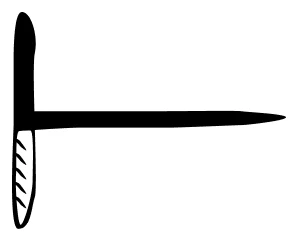
This is ㄴ, read as [n]. It looks like a nail you're about to hammer in. See ㄴ, picture the nail, and the sound [n] comes right back.
ㅂ
b/p
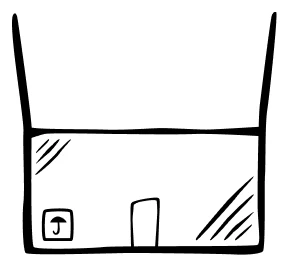
This is ㅂ, a sound between [b] and [p]. It looks like an open box: imagine opening it and letting out a sigh.
ㅣ
i
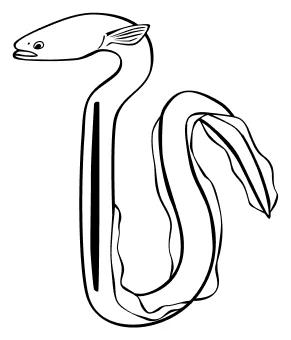
And this is the vowel ㅣ, read as [i] like in “eel”. Visually, it resembles a sea eel.
Pictures for all 40 letters, audio, quizzes and flashcards are in the app. The first lessons are free.


Questions
How many letters are in the Korean alphabet?
40 in everyday use: 19 consonants and 21 vowels. Some books say 24, counting only the 14 basic consonants and 10 basic vowels. The other 16 are built from them: double consonants like ㄲ and combined vowels like ㅘ (ㅗ + ㅏ).
Is Hangul hard to learn?
It's one of the easiest scripts to learn. King Sejong created it in 1443 so that ordinary people could read, and its shapes follow clear rules: consonants are drawn after the mouth shape that makes them, vowels are combinations of a few strokes. Most learners read simple words within a few days.
Why are Korean letters written in blocks?
Each block is one syllable. It starts with a consonant (ㅇ if the syllable starts with a vowel sound), then the vowel goes to the right or below, and an optional final consonant sits at the bottom. 한 is ㅎ + ㅏ + ㄴ. So 서울 (Seoul) has two blocks and five letters.
Why do I see both kimchi and gimchi?
ㄱ, ㄷ, ㅂ and ㅈ sit between English g/k, d/t, b/p and j/ch, so different romanizations pick different letters. The official system (used on road signs and on this page) writes 김치 as gimchi, while older spellings and brands use kimchi. Listening to the audio helps more than any spelling.
Which Korean sounds are the hardest?
The vowels ㅓ (eo) and ㅡ (eu), which English doesn't have, and the three-way difference between plain, tense and breathy consonants: ㄱ ㄲ ㅋ, ㄷ ㄸ ㅌ, ㅂ ㅃ ㅍ, ㅈ ㅉ ㅊ. Modern Seoul speech pronounces ㅐ and ㅔ the same, so you can relax about that pair.
How long does it take to learn Hangul?
In Alfabird the Korean alphabet is split into 6 short lessons with tests. At 10 to 15 minutes a day, most people get through it in about a week.
Your first letter
takes a minute.
Download Alfabird for free and start with the first lessons today.
Scan with your
phone camera