Hiragana Chart with Pronunciation
46 characters, each one a whole syllable. Tap any of them to hear a native speaker. Below we show how two small marks turn them into 25 more sounds, the rules that change how words are read, and real words to try.
- 46 charactersone per syllable
- 5 vowelsあいうえお
- +25 soundsが ざ だ ば ぱ
- 3 scriptshiragana, katakana, kanji
All 46 charactersHiragana
The traditional table: each column is a vowel (a, i, u, e, o), each row a consonant. Vowels are green. Tap a character to listen.
 Alfabird
Learn new alphabets with mnemonics, native-speaker audio and short lessons.
alfa-bird.com
Get the app
Characters that are easy to mix up
Hiragana is all soft curves, and a few characters are near copies of each other. These pairs confuse beginners most:
- さsa≠ちchi
- ぬnu≠めme
- ねne≠れre
- るru≠ろro
Look familiar, read differently
ん
looks like «h», reads
n
く
looks like «<», reads
ku
へ
looks like «^», reads
he
し
looks like «J», reads
shi
Rules that change the sound
Once you know the 46 characters, a handful of rules let you read almost any word written in hiragana.
Two dots and a circle: 25 more sounds
The mark ゛ (dakuten) makes a consonant voiced: k becomes g, s becomes z, t becomes d, h becomes b. The small circle ゜ (handakuten) works only on the h row and turns it into p. No new characters to learn, just two marks.
- か がka · ga
- さ ざsa · za
- た だta · da
- は ばha · ba
- は ぱha · pa
Small っ: a short pause
A small っ doubles the next consonant: you hold your breath for a beat before it. Without it the meaning changes: おと (oto) is a sound, おっと (otto) is a husband.
Long vowels change the word
An extra vowel makes the sound twice as long, and Japanese counts that length. おばさん (obasan) is an aunt, おばあさん (obāsan) is a grandmother.
Small ゃ ゅ ょ merge with the syllable
A small ゃ, ゅ or ょ after an i syllable merges into one sound: き + ゃ = きゃ (kya). Written full size, it's read separately: びょういん (byōin) is a hospital, びよういん (biyōin) a beauty salon.
は, を and へ as particles
When は is the topic particle it's read wa, を is always o, and へ meaning "to" is e. Japanese has no spaces, so try ははははなとはなす: haha wa hana to hanasu, "mom talks to a flower".
u and i often go quiet
Between voiceless consonants and at the end of words, u and i are almost silent. すき (like) sounds like "ski", and です sounds like "des".
Trainer: do you know this character?
We show a random character and you pick how it reads. A wrong answer is fine: we show the right one straight away, and you can listen to it.
Try reading these
Words you may already know from anime, food and travel. Read them character by character, then check yourself and listen to a native speaker.
すし
かわいい
すごい
せんせい
とうきょう
にほん
こんにちは
さようなら
もしもし
すみません
いただきます
がんばって
Remember, don't cram
In the Alfabird app every character comes with a picture that makes it stick. Here are the first three from lesson 1:
あ
a
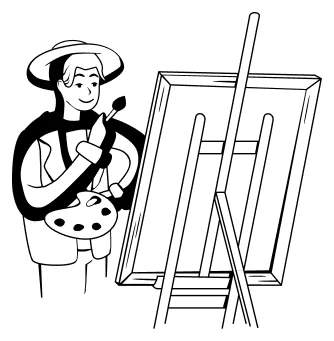
This is あ, read as [a] like in “artist”. Imagine an artist painting a picture.
い
i
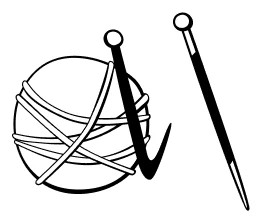
This is い, read as [i] like in “needle”. Imagine someone knitting with two knitting needles.
う
u
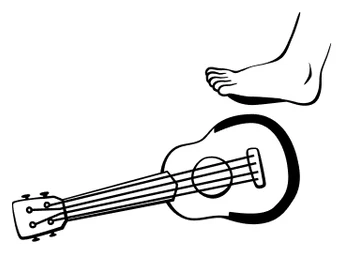
And this is う, read as [u] like in “foot”. Imagine an ukulele and someone about to step on it with their foot.
Pictures for all 46 characters, audio, quizzes and flashcards are in the app. The first lessons are free.


Questions
How many hiragana characters are there?
46 basic characters. With the marks ゛ and ゜ they give 25 more sounds (が, ざ, ぱ…), and small ゃ, ゅ, ょ combine with them into another 33 (きゃ, しゅ, ちょ…). You only need to learn the 46 shapes and two marks.
Hiragana, katakana, kanji: what's the difference?
Japanese uses three scripts together. Hiragana writes native words, grammar endings and particles. Katakana has the same sounds in sharper shapes and is used for foreign words like コーヒー (coffee). Kanji are Chinese characters for meanings. Every Japanese learner starts with hiragana.
In what order should I learn hiragana?
Follow the table: first the five vowels あいうえお, then the k, s, t, n, h, m, y, r and w rows, and ん at the end. Each row reuses the vowels you already know, so the table teaches itself.
Why is し shi and not si?
Romaji follows the real sound. Japanese has no si, ti, tu or hu: those syllables come out as shi, chi, tsu and fu. Some textbooks write si and ti anyway; the pronunciation is the same.
Which sounds are the hardest?
The r row (ら り る れ ろ), which is a quick tap between r, l and d; ふ, which is softer than an English f; and つ (tsu) at the start of a word. Length matters too: a long vowel or a small っ can change the meaning of a word.
How long does it take to learn hiragana?
In Alfabird hiragana is split into 10 short lessons with tests. At 10 to 15 minutes a day, most people can read it in about two weeks.
Your first letter
takes a minute.
Download Alfabird for free and start with the first lessons today.
Scan with your
phone camera